Ratatouille Recipe: A Step-by-Step Guide to This French Favorite
Ever wondered how a simple vegetable stew became a global culinary sensation? Let’s dive into the colorful world of ratatouille, a dish that’s as fun to say as it is to eat.
Born in the sun-kissed fields of Provence, ratatouille started as a farmer’s quick fix for using up extra veggies. But don’t let its humble roots fool you – this French dish has climbed the culinary ladder to star in fancy restaurants and home kitchens alike.
So, what’s the big deal about this veggie medley? Well, the magic lies in its simplicity. A good ratatouille recipe transforms everyday ingredients into a symphony of flavors. It’s like conducting an orchestra where each vegetable plays its part perfectly.
But here’s the kicker – there’s no one “right” way to make it. From traditionalists who swear by layering each vegetable to modernists who throw everything in one pot, ratatouille recipes are as varied as the cooks who make them. This versatility is why ratatouille food recipes continue to evolve and surprise us.
Curious about trying your hand at this ratatouille dish? Whether you’re a kitchen newbie or a seasoned pro, there’s a recipe of ratatouille out there for you. And the best part? It’s a perfect gateway into the world of plant-based eating. Who knew veggies could be this exciting?
As we peel back the layers of this ratatouille food recipe, we’ll discover why it’s more than just a tasty meal. It’s a celebration of seasonal produce, a nod to culinary history, and maybe even a glimpse into the future of cooking. Ready to explore how this simple ratatouille dish recipe has stirred up the culinary world? Let’s get cooking!
History of The Ratatouille
In the 1920s, ratatouille‘s appeal expanded beyond rustic homes, finding its way into restaurants as a beloved staple of regional French cuisine. The dish’s reputation for hearty, earthy flavors resonated with chefs and diners alike, contributing to its rise in culinary art.
Today, many French countryside bistros offer ratatouille, often made with locally sourced ingredients, as a testament to its enduring popularity.
Quickly forward to 2007, and Pixar’s film “Ratatouille” catapulted this peasant dish into the limelight, celebrating not just the recipe, but the passion and artistry behind it. The movie showcased the beauty of transforming humble vegetables into a gourmet masterpiece, cementing ratatouille’s status as an enduring symbol of French culinary tradition.
Recipe
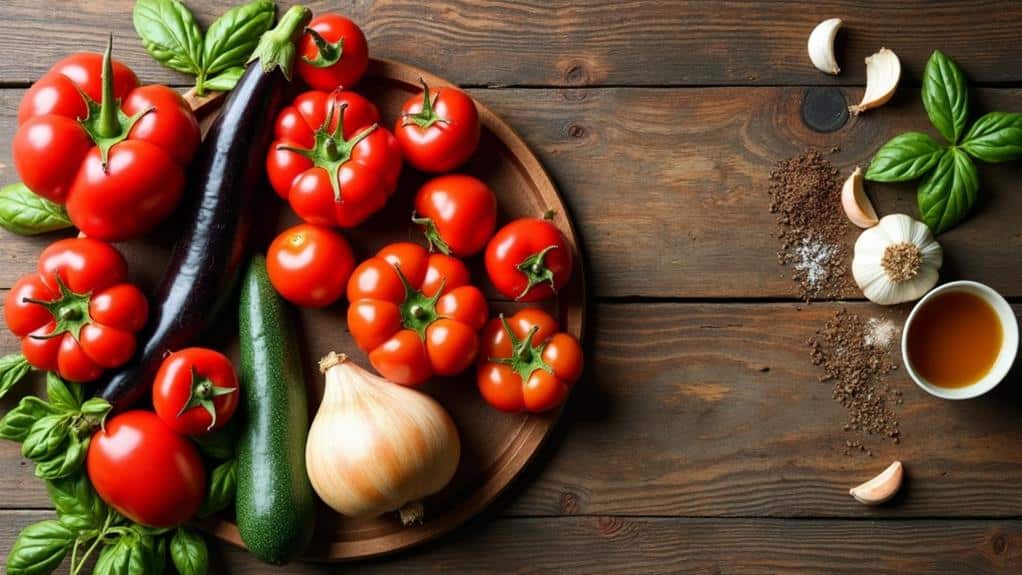
To make a delightful ratatouille, start by gathering a selection of fresh, late-summer vegetables. This dish highlights the flavors of ripe tomatoes, eggplant, zucchini, bell peppers, and onions. The key to a successful ratatouille is in the preparation and layering of these vegetables, allowing their flavors to blend together beautifully.
Begin by chopping all the vegetables into uniform pieces to guarantee even cooking. The base of the dish starts with sautéing onions and garlic in a moderate amount of olive oil, which enhances the overall flavor while keeping the dish healthy. Much like the symmetrical layouts of Roman architecture, arranging your ingredients with precision can elevate the dish’s presentation and taste.
Once the onions and garlic are fragrant and slightly translucent, it’s time to add the chopped vegetables. Layer them carefully in a large pot or skillet, starting with the eggplant, followed by zucchini, bell peppers, and lastly, fresh tomatoes. Allow the vegetables to simmer gently for approximately 15 minutes, stirring occasionally to prevent sticking. This cooking technique allows the flavors to evolve and meld, resulting in a harmonious and vibrant stew.
Optional garnishes like fresh basil or cheese can be added before serving for extra richness.
Ingredients:
- Fresh tomatoes
- Eggplant
- Zucchini
- Bell peppers
- Onions
- Garlic
- Olive oil
- Salt and pepper
- Optional: Fresh basil and cheese
After gathering and preparing your ingredients, begin by heating olive oil in a large skillet over medium heat. Add the onions and garlic, sautéing until they become fragrant and translucent. Next, layer in the eggplant, zucchini, and bell peppers, followed by the fresh tomatoes. Season with salt and pepper to taste. Cover the skillet and allow the mixture to simmer for about 15 minutes, stirring occasionally, until the vegetables are tender and the flavors have blended together. Serve warm, garnished with fresh basil and cheese if desired.
For best results, ratatouille can be made a day ahead, as the flavors continue to enhance overnight. Additionally, the dish freezes well, preserving its taste and texture for up to three months. When layering the vegetables, try to create even layers for uniform cooking. Using a high-quality olive oil can also amplify the dish’s flavor. Enjoy ratatouille as a standalone meal or as a versatile side, accommodating various dietary preferences with ease.
Final Thoughts
Ratatouille stands as a testament to the beauty of simplicity in cooking, highlighting the natural flavors of seasonal vegetables. This versatile and nutrient-dense dish brings together fresh tomatoes and zucchini that is tender, making it a delicious summer favorite.
It’s like a symphony of flavors and textures that gets better over time, perfect for meal prep enthusiasts. Imagine the ease of having a mouth-watering meal ready to go, which not solely reduces food waste but also celebrates late-summer produce.
Cooking ratatouille on medium heat allows the vegetables to meld into a harmonious blend, while serving it with crusty bread adds a satisfying crunch. A sprinkle of grated Parmesan or fresh basil can elevate the dish, adding that final flourish of flavor.
Whether served as a warm salad or paired with pasta, ratatouille offers unparalleled flexibility. The rich flavors and beautiful presentation of ratatouille are reminiscent of the elegance found in French cuisine.
Community feedback often praises its adaptability—think of it as the little black dress of the culinary world. You can personalize it without losing its essence.


